Bio-Machine
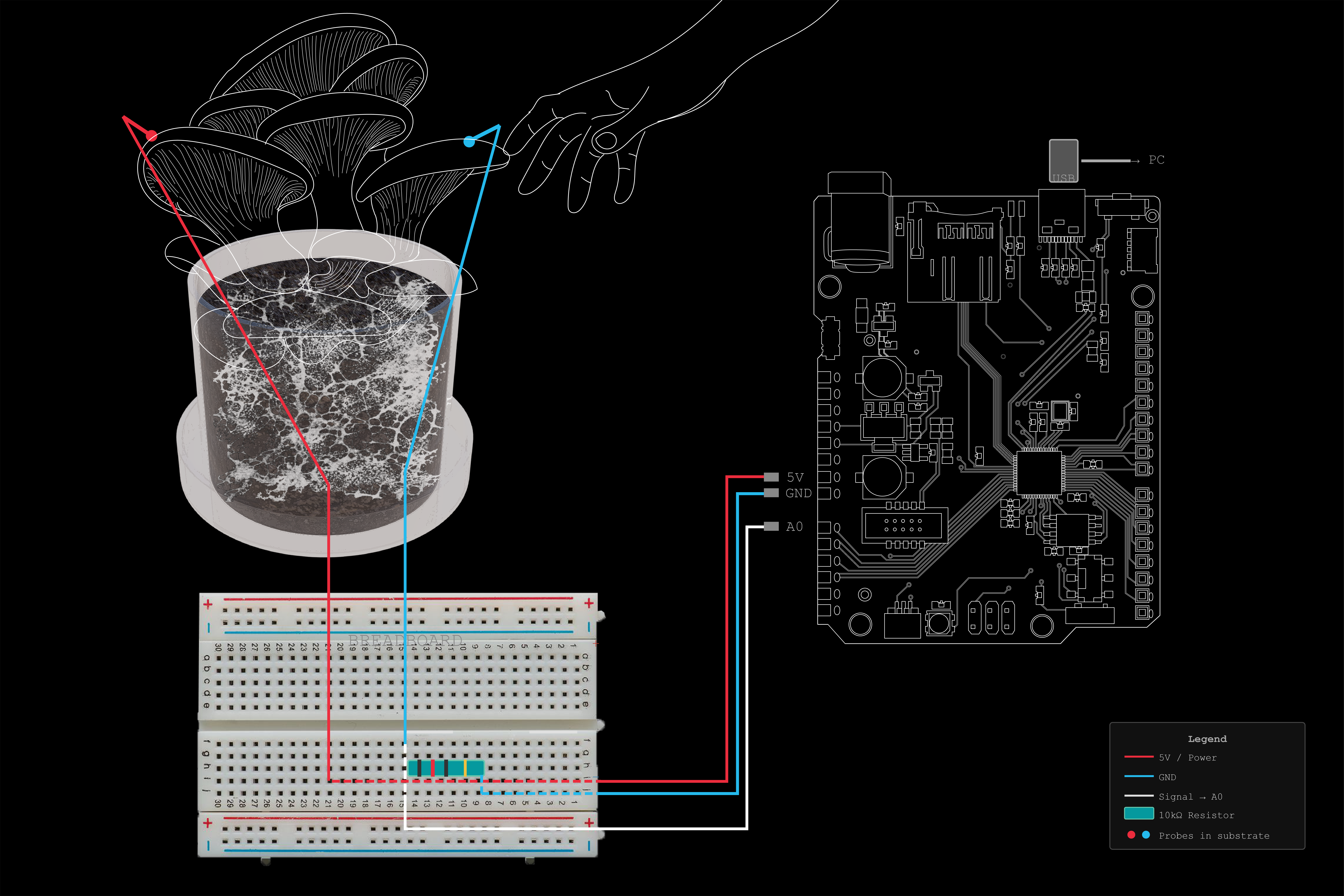
This experiment investigates the bioelectrical responsiveness of Chlorophytum comosum (spider plant) and Pleurotus ostreatus (blue oyster mushroom) to direct human interaction. By inserting electrodes into plant tissue and mycelium, the organisms are wired as passive biosensors — their internal electrical states made legible through a sensor array that captures conductivity shifts, CO₂ fluctuations, thermal gradients, and vibrational response. The experiment does not stimulate the organisms; it listens to them. Each human action — touch, breath, voice, proximity, intention — becomes a variable in an open-ended dialogue between species, documented as raw signal.
Biological + Architectural Logic
Logics and timescales of biological systems do not operate at the human scale. The plant and fungal logic operating here is one of distributed sensing without centralized control. Signal emerges from the network itself, propagating through tissue and mycelium as a function of threshold and chemistry rather than instruction. These organisms compute on biological time: not optimizing for speed, but for persistence, rerouting, and sufficient response.
This architectural system will imagine a plant/mushroom bio-hybrid machine, which will allow us to think differently about our interactions with plants and mushrooms. How will we design differently with plants in mind? What if the plant was a consultant or a design partner? Architecture can and should create a healthy environment for both humans, plants, and fungi. What rules does this system operate under? What is the dialogue between each species in the system? Can the logic be attributed to a reward/cost system? How do the rules change when a human is added to the equation? What role do I play, and how much or little do I need to intervene?
Abstract
Context
The global biodiversity crisis is partly a crisis of imagination: we have not yet designed environments that make space for other species as active participants rather than passive inhabitants. At the same time, the accelerating infrastructure of AI and computation is deepening environmental inequality — extracting resources, compressing time, and optimizing systems according to human logics that have no place for slowness, for growth, for the non-linear.
This experiment responds to both conditions. It asks: what would it mean to develop a genuinely symbiotic relationship with fungi and plants — not as resources, not as aesthetics, but as co-designers? And what does that require of us as humans? The bio-machine questions how to adapt our lifestyles and environments to rethink species integration for the future.
The bio-machine positions the mushroom and the spider plant not as objects of study but as interlocutors. Their electrical responses to human presence are a form of feedback. The experiment is a first attempt at learning to listen.
Experimentation
Spider Plant
Chlorophytum comosum — Bioelectrical Response to Human Interaction
| Interaction Type | Sensor | Variable Captured |
|---|---|---|
| Talk / play music | Piezo vibration + ADS1115 | Acoustic pressure, bioelectrical shift |
| Touch | ADS1115 + Ag/AgCl electrodes | Thigmomorphogenetic EC spike |
| Breath | SCD40 + SHT41 | CO₂ pulse, humidity + temp change |
| Proximity | MLX90614 + APDS9960 | IR thermal gradient, light/shadow |
| Show a drawing | APDS9960 + bioelectrical | Light change + baseline EC response |
Blue Oyster
Pleurotus ostreatus — Bioelectrical Response to Human Touch
| Interaction Type | Sensor | Variable Captured |
|---|---|---|
| Direct touch | Ag/AgCl electrodes — stem | EC spike — action potential-like |
| Brush | Ag/AgCl electrodes — stem | Attenuated wave-packet response |
| Multiple touches | Ag/AgCl electrodes — stem | Signal summation across fruit bodies |
| Indirect touch | Ag/AgCl electrodes — mycelium | Propagated inter-fruit signaling |
Each human action — touch, breath, voice, proximity, intention — becomes a variable in an open-ended dialogue between species, documented as raw signal. The experiment does not stimulate the organisms; it listens to them.
Methodology
STEMMA QT / I2C + Analog
Voltage divider → A0
CO₂ · Temp · Humidity · Light
Capacitive moisture · I2C 0x36
Timestamped CSV
Ag/AgCl pellet or needle
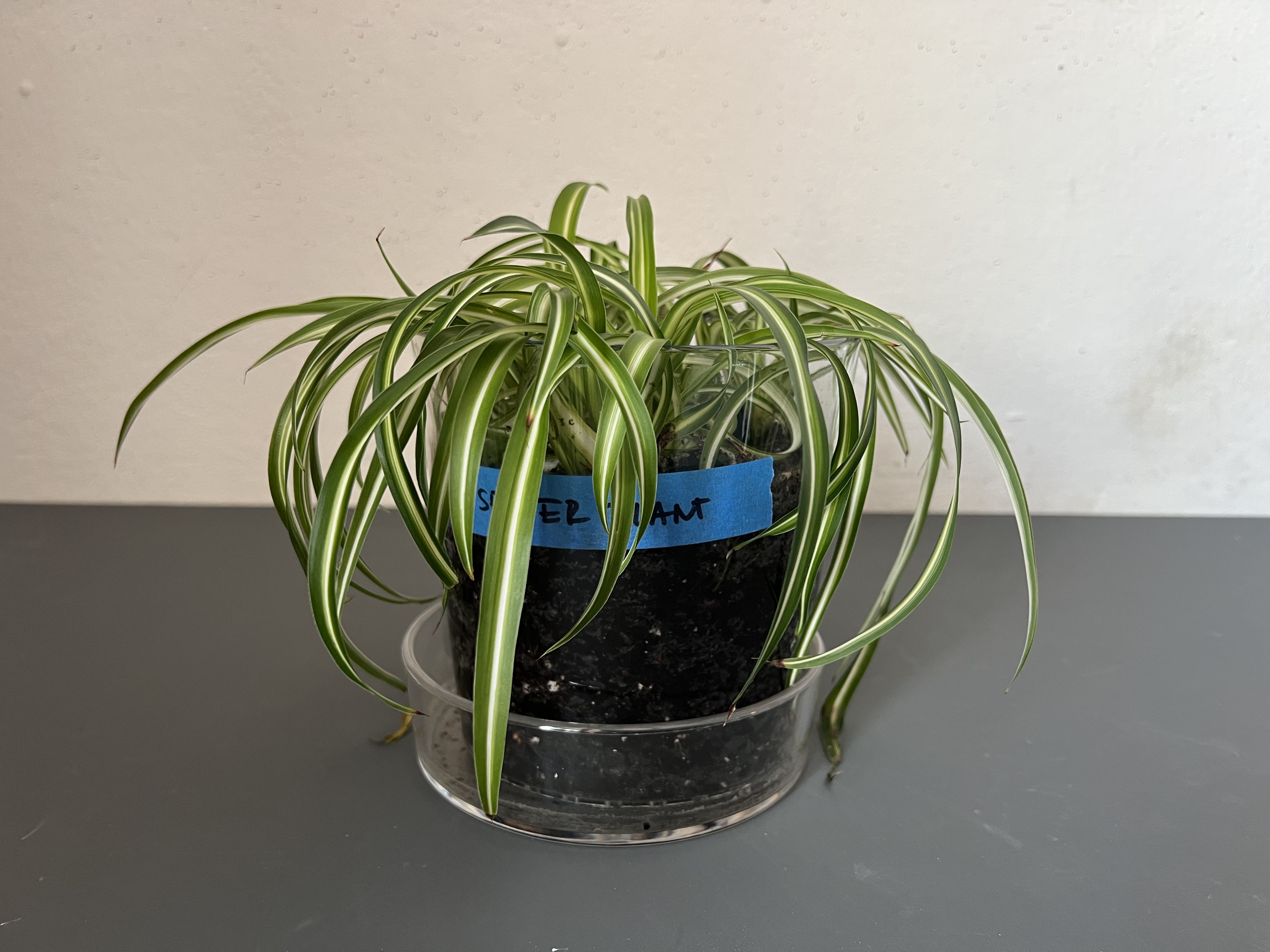
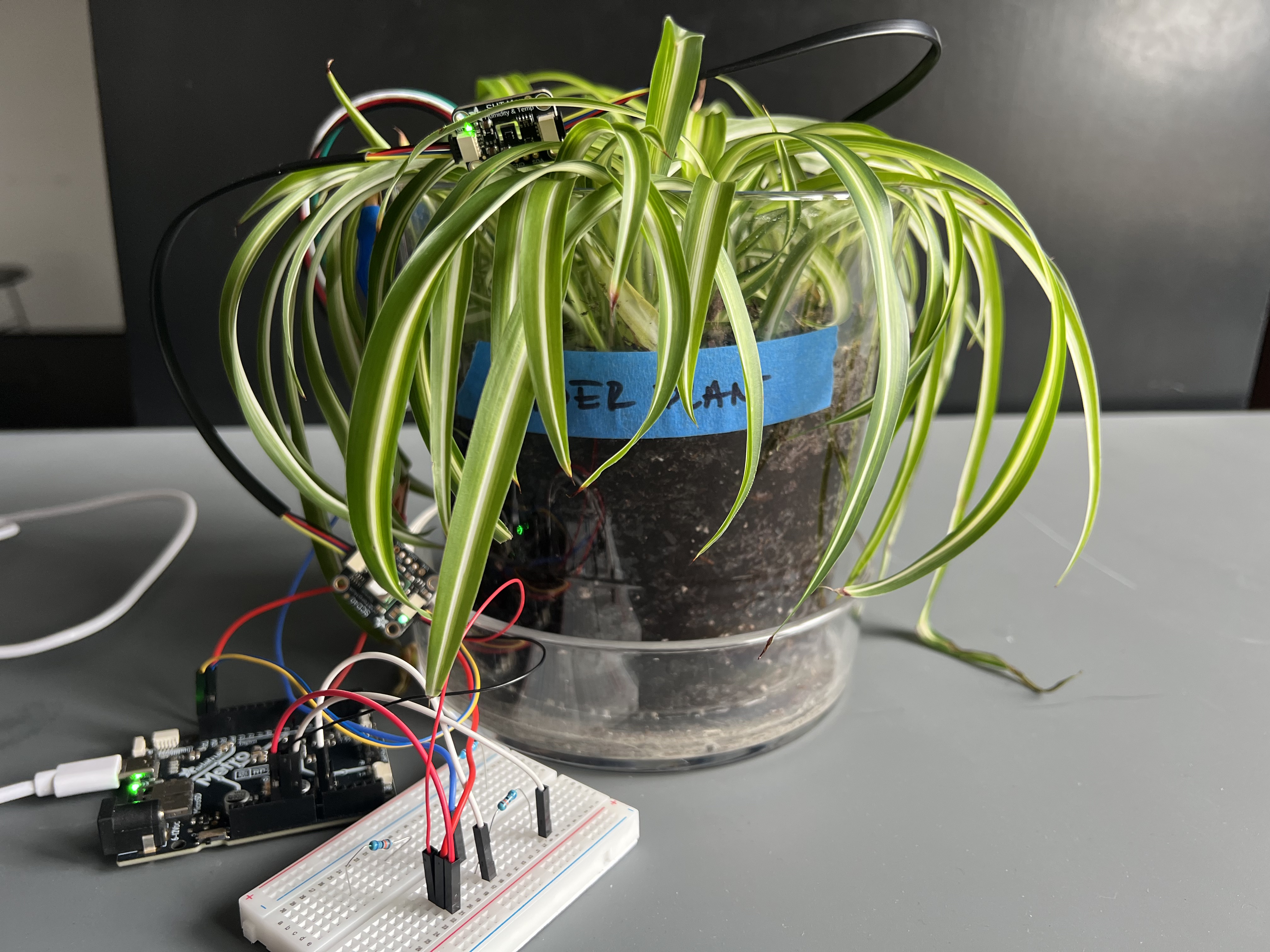
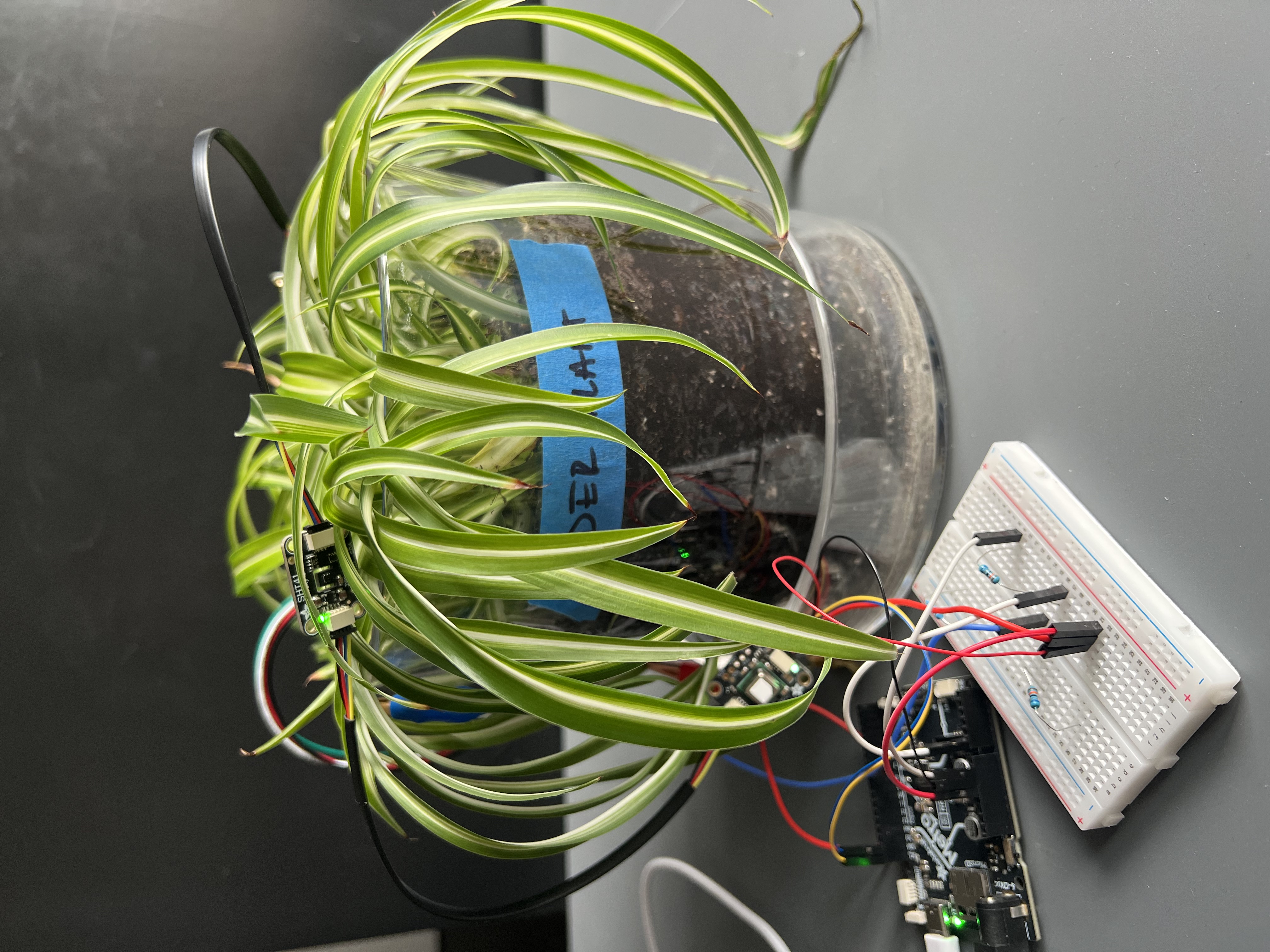
Electrode protocol: Ag/AgCl pellet electrodes clipped to leaf petiole for spider plant; needle electrodes inserted into mycelium base and mushroom stem for blue oyster. Each interaction condition held for a fixed duration with a baseline period before and after — producing a comparative record of signal behavior across interaction types.
The sensor array makes biological computation legible without intervening in it. Sensors function as witnesses, not controllers.
Interaction
In the blue oyster mushroom, touch and acoustic stimulation trigger electrochemical cascades through the mycelial network — action potential-like impulses propagate between fruit bodies within seconds, mediated by ion flux across hyphal membranes. The organism has no nervous system, yet produces coordinated electrical responses that resemble neuronal signaling in their wave-packet structure and inter-body propagation.
In the spider plant, human proximity introduces thermal gradients detected at the leaf boundary, while breath delivers a localized CO₂ and humidity pulse that transiently alters stomatal aperture and turgor pressure. Touch activates thigmomorphogenetic pathways — mechanical deformation of cell walls triggers calcium ion release, which cascades through the plant's vascular tissue as a measurable voltage shift.
Both organisms operate distributed signal networks without centralized processing: computation through chemistry, transmitted electrically.
Documentation
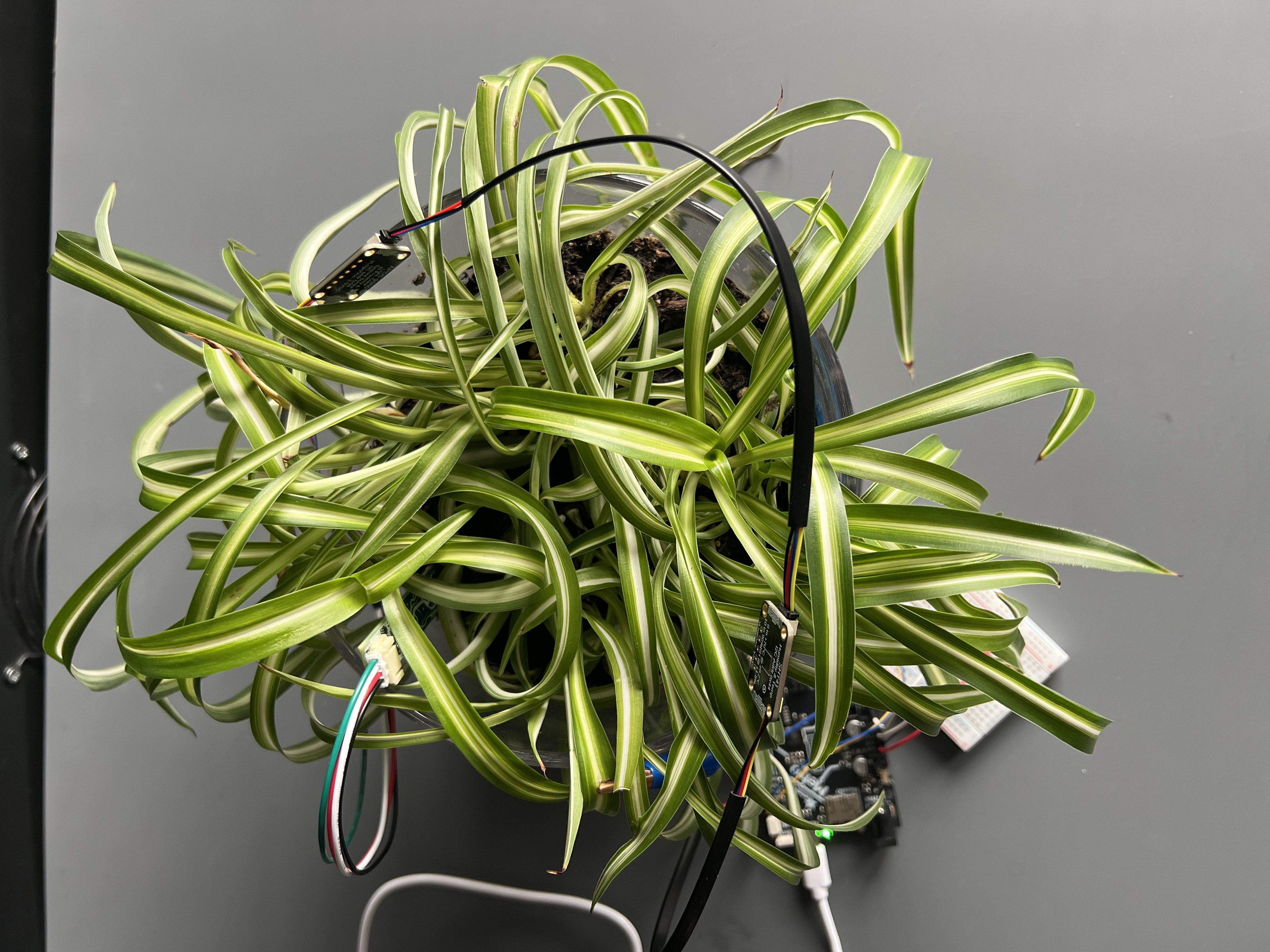
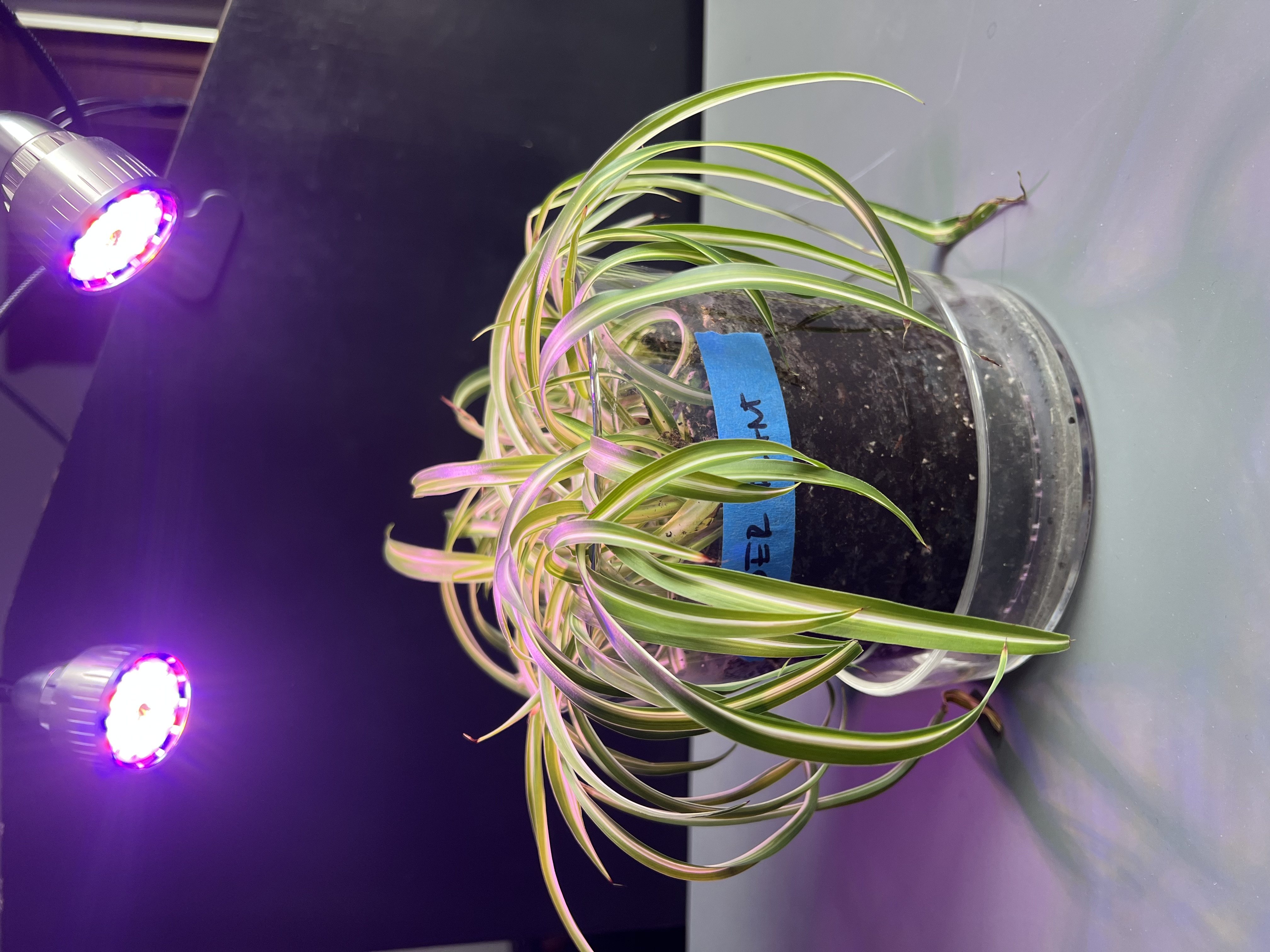
Data
EC Response
logged simultaneously
per channel
per session
instrumented
Each session logs all 8 channels as a single timestamped CSV, enabling cross-channel correlation between bioelectrical spikes and environmental variables at the moment of each interaction type.
EC Response
Blue oyster EC data from direct touch, brush, multiple touches, and indirect touch will populate this section. Annotations will mark the moment of each interaction type against the raw conductivity signal.
Thesis Context
Plants operate on their own timescale, not the human scale. We cannot force or project our own logic onto these living creatures. We must understand that they operate under their own set of rules and logics. When designing for the non-human, we must also consider that different species operate under different timescales and grow at different rates.
Our perception of computing is constantly striving towards a faster system, but this is based on human time. As humans, society is telling us to become more optimal and time-efficient — but plants and fungi don't operate with this logic. Perhaps when designing, we need to reframe whose timescale we're operating on.
This future world considers how species can exist together — not only for the purpose of survival and nutrient exchange, but how we can more deeply understand the logics of what is happening underneath the reactions and communications, creating a deeper symbiotic relationship. The logic absorbed from working with plants and fungi — slow computation, distributed processing, signal without intention — is taken on as a design methodology.
We are not faster. We are more patient.
The algorithm that emerges from this experiment translates bioelectrical signal into generative architectural form: conductivity thresholds trigger growth events, CO₂ gradients establish spatial hierarchies, proximity data shapes enclosure. The rendering is not a finished building but a process — a structure in a continuous state of becoming, legible only across time. The physical installation places the mushroom in an enclosed ventilated chamber, the spider plant in open air beside it, both wired and reading. The circuit is visible. When the organism responds, light responds. Human presence becomes, for the first time, something the building can feel.