Engineered
Circadian Rhythms
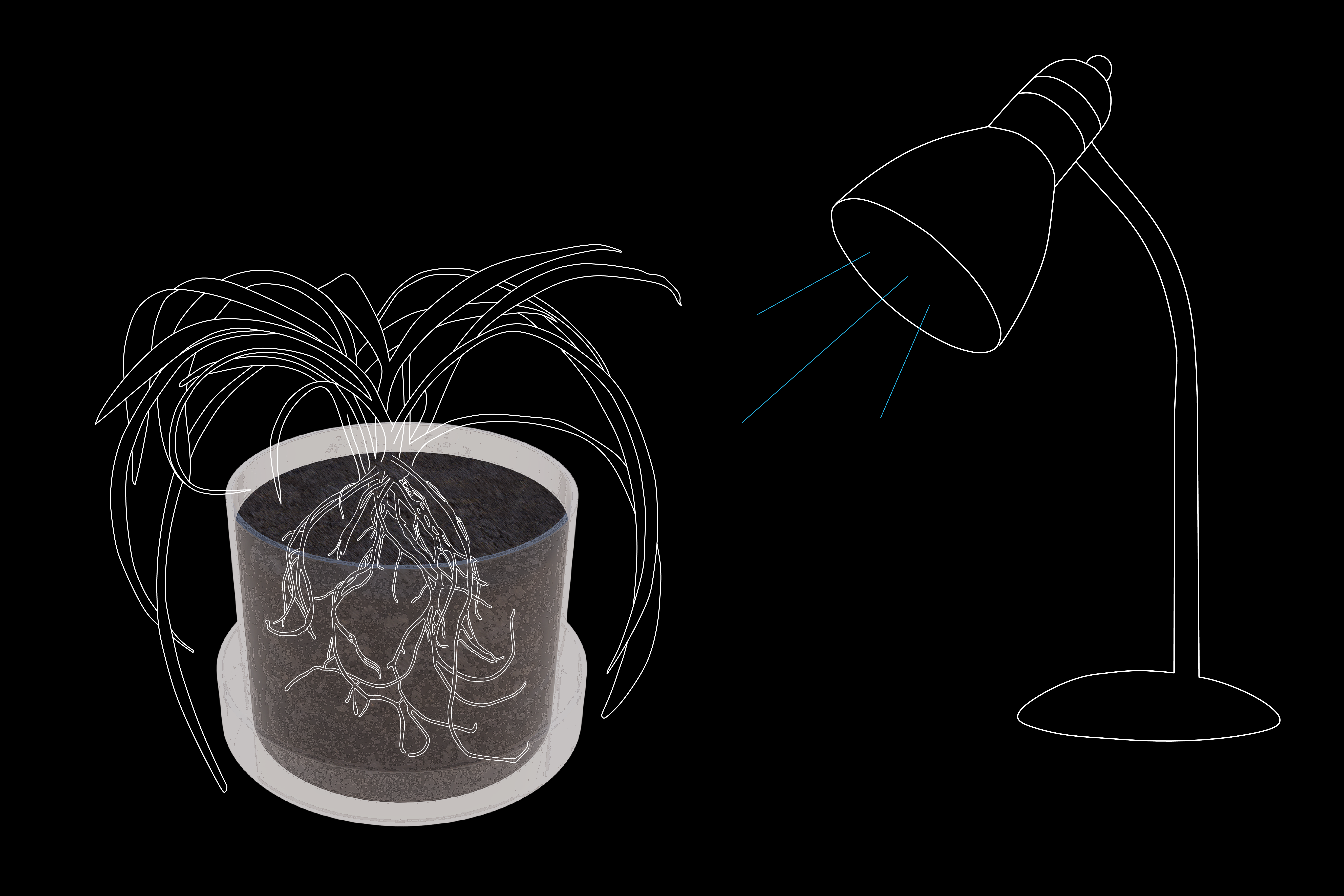
Chlorophytum comosum is one of the most adaptable houseplants known — tolerant of low light, variable humidity, and wide temperature ranges. This experiment measures the CO₂ it releases and consumes under engineered light conditions and across a full 24-hour cycle, asking whether the plant's metabolic rhythm is a response to external stimulus or an endogenous oscillation running on its own clock.
Biological + Architectural Logic
From the plant's point of view, there is no objective. Photosynthesis is not a goal — it is a response. The plant is not producing; it is persisting. CO₂ flux is not an output the plant is working toward but a byproduct of its continuous negotiation with its environment: adjusting stomatal aperture, managing water loss, responding to light availability, maintaining internal chemical equilibrium. What we read as productivity is, from the plant's perspective, simply survival — the ongoing computation of staying alive under whatever conditions the environment presents.
By measuring CO₂ in relation to time and light, we ask whether the plant's metabolic rhythm is a response to external input — light as stimulus — or an endogenous oscillation that persists independent of it. Architecturally, we can discover whether plants are a purely reactive system, or if there is a deeper circadian rhythm operating at its own tempo. How can we engineer a circadian rhythm to enhance biological output without overriding the system?
Abstract
Context
As atmospheric CO₂ concentrations rise and urban light pollution disrupts natural day/night cycles, what happens to the organisms that evolved to breathe within those rhythms? This experiment asks: how does a spider plant metabolize stress?
Three converging crises form the problem context: smog and CO₂ accumulation (pollution), accelerating water scarcity as weather extremes intensify, and the electrical grid strain produced by the explosive energy demands of the AI era. Chlorophytum comosum is resilient to all three — it tolerates low light, purifies air, and requires minimal water. But resilience has limits, and those limits are legible in data.
By monitoring CO₂ flux under controlled light conditions and across a natural 24-hour cycle, this experiment captures the metabolic signature of a plant navigating engineered environments. The central question remains open: is the plant's rhythmic CO₂ pattern driven by light stimulus, or by an endogenous circadian clock operating below the threshold of our instruments?
Experimentation
Question
Does Chlorophytum comosum regulate CO₂ exchange in response to light conditions, internal circadian rhythm, or both — and can that regulation be made visible as a design material?
The sensor does not intervene in the plant's computation. It witnesses it. CO₂ flux is the legible trace of photosynthesis — a process the plant performs without instruction, without awareness of being measured.
| Condition | Setup | Result |
|---|---|---|
| Natural light — open | Ambient air exchange, no light control | Establishes noise floor; continuous CO₂ exchange with room air |
| Darkness — sealed | Grow light off, sealed enclosure | CO₂ unexpectedly declined — likely dissolution into leaf moisture + sensor self-calibration drift |
| Natural light — closed | Sealed enclosure, ambient daylight only | Gradual CO₂ drawdown as photosynthesis accumulates in sealed space |
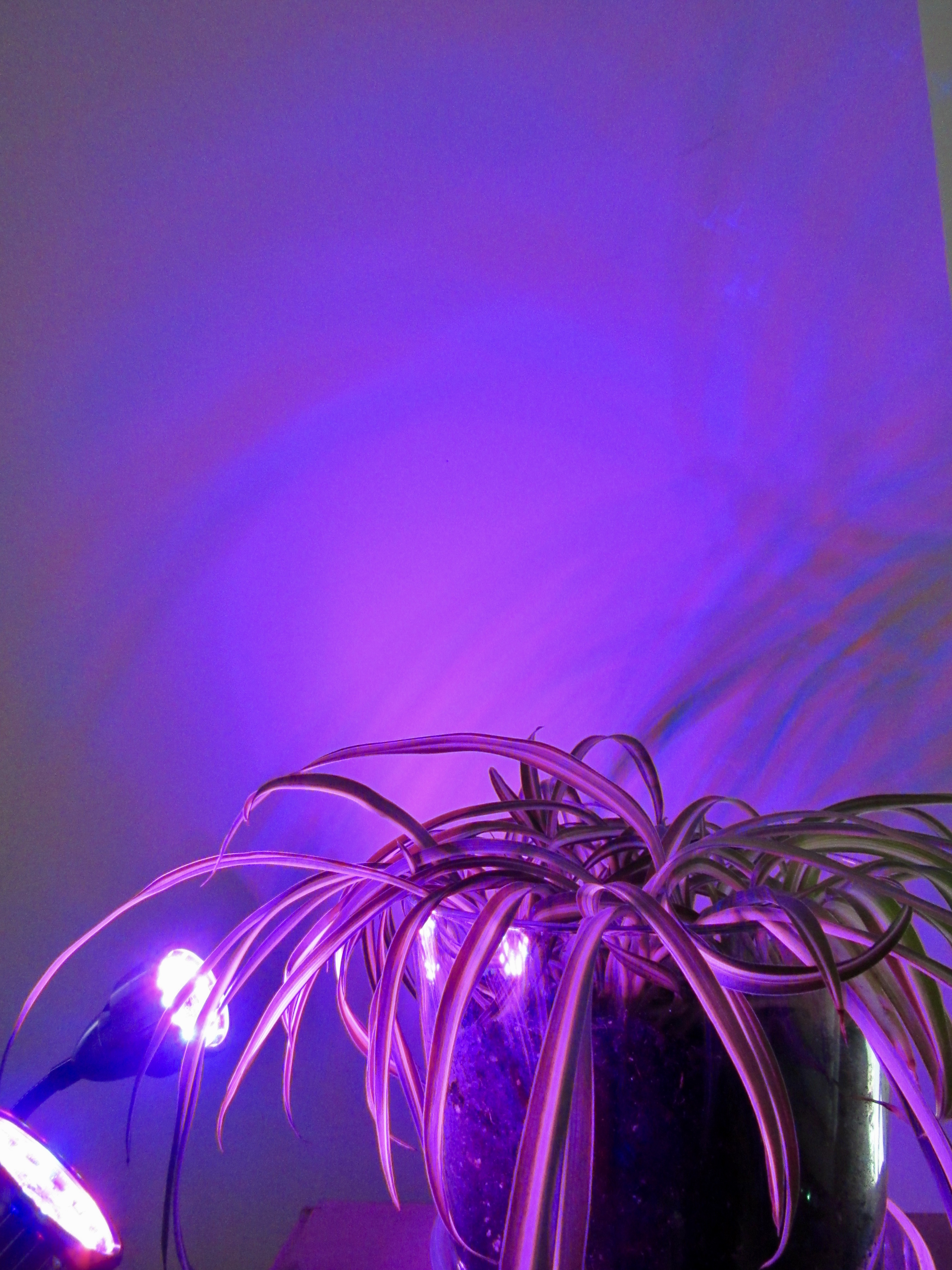
| Purple grow light | 650nm + 450nm targeting chlorophyll peaks | Strongest photosynthetic drawdown — ~400 ppm spread vs. darkness |
| 24-hour cycle | Natural light, automated pyserial logging | CO₂ minimum at ~01:48 — metabolic activity persisting after dark |
On circadian rhythms in plants: yes — plants have genuine endogenous circadian clocks. In spider plants specifically, stomatal movement anticipates dawn rather than simply reacting to it: the classic signature of an internal oscillator. The clock and light reactivity are not mutually exclusive — the circadian clock gates the plant's sensitivity to light, meaning the same stimulus at dawn and at midday produces different responses.
Methodology
CO₂ · Temp · Humidity
STEMMA QT / I2C
Wall-clock timestamped
pandas · Chart.js
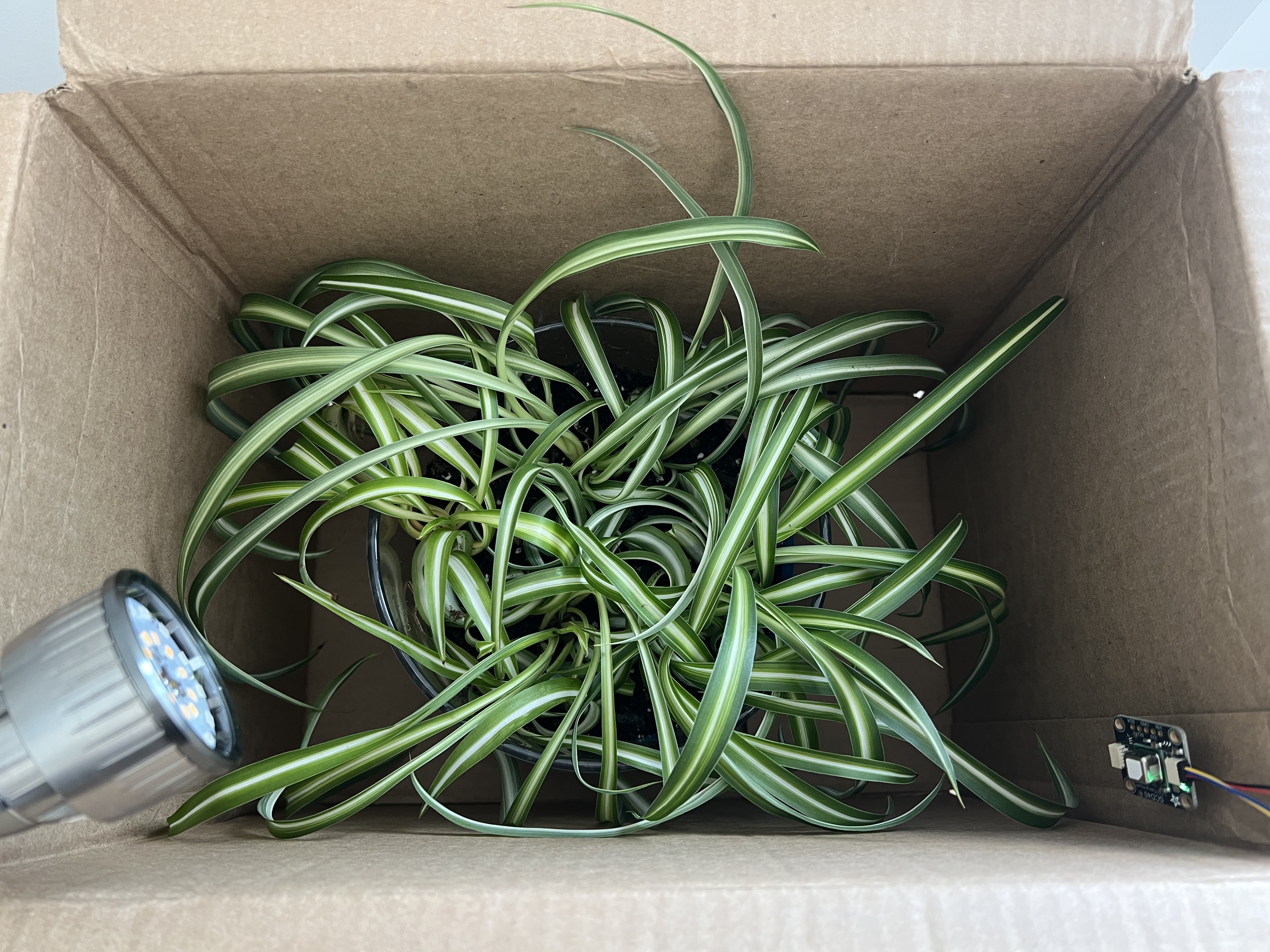
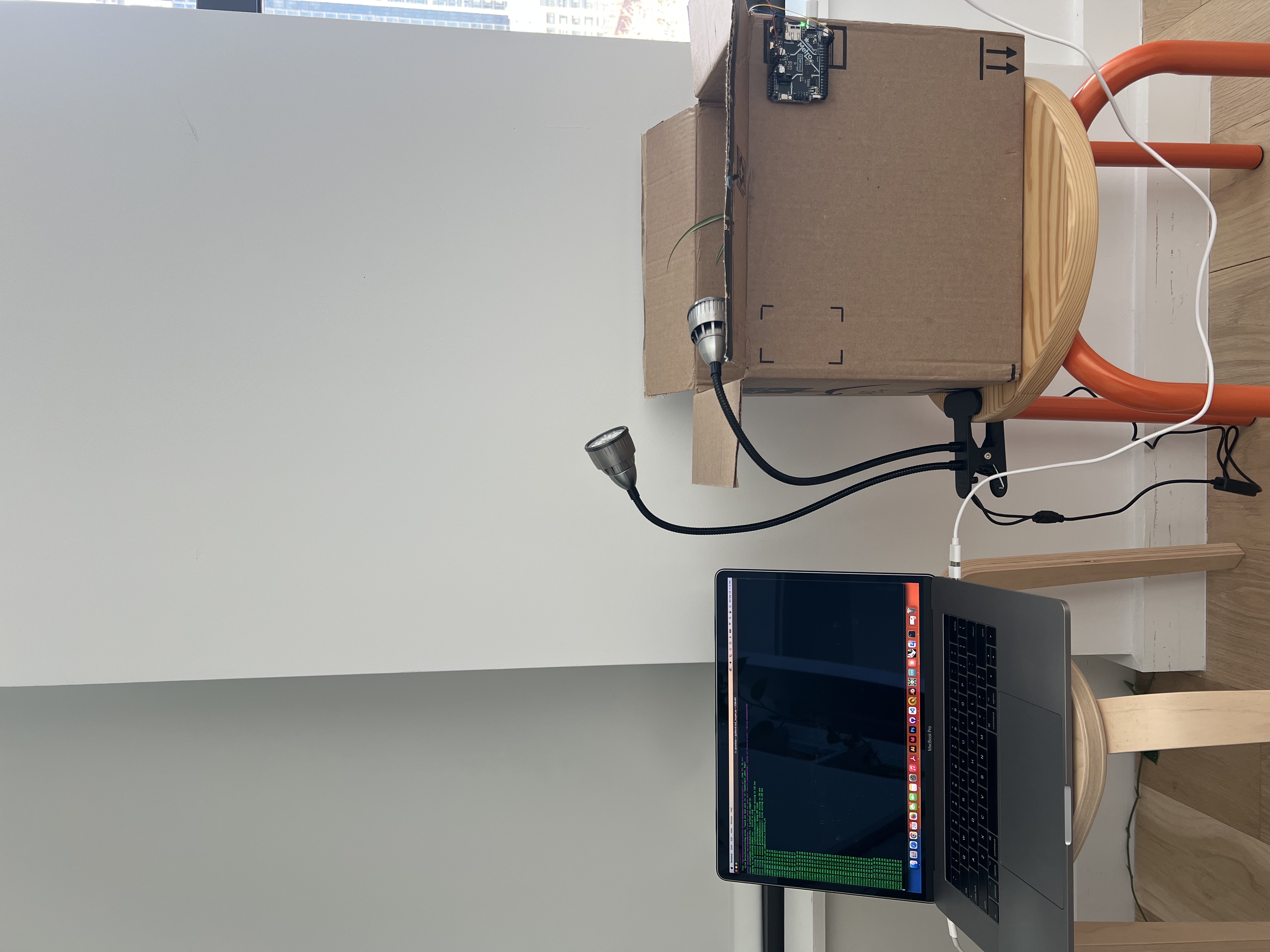
Enclosure protocol: condition order run as darkness → natural closed → purple to avoid thermal carryover from a warm lamp into a cold-start baseline. Grow light allowed to thermally stabilize before sealing to reduce temperature-driven CO₂ drift artifacts.
24-hour protocol: plant in normal environment, sensor at leaf level. Automated continuous logging from evening through following afternoon. Light conditions shift naturally — producing naturalistic rather than engineered rhythm.
Documentation
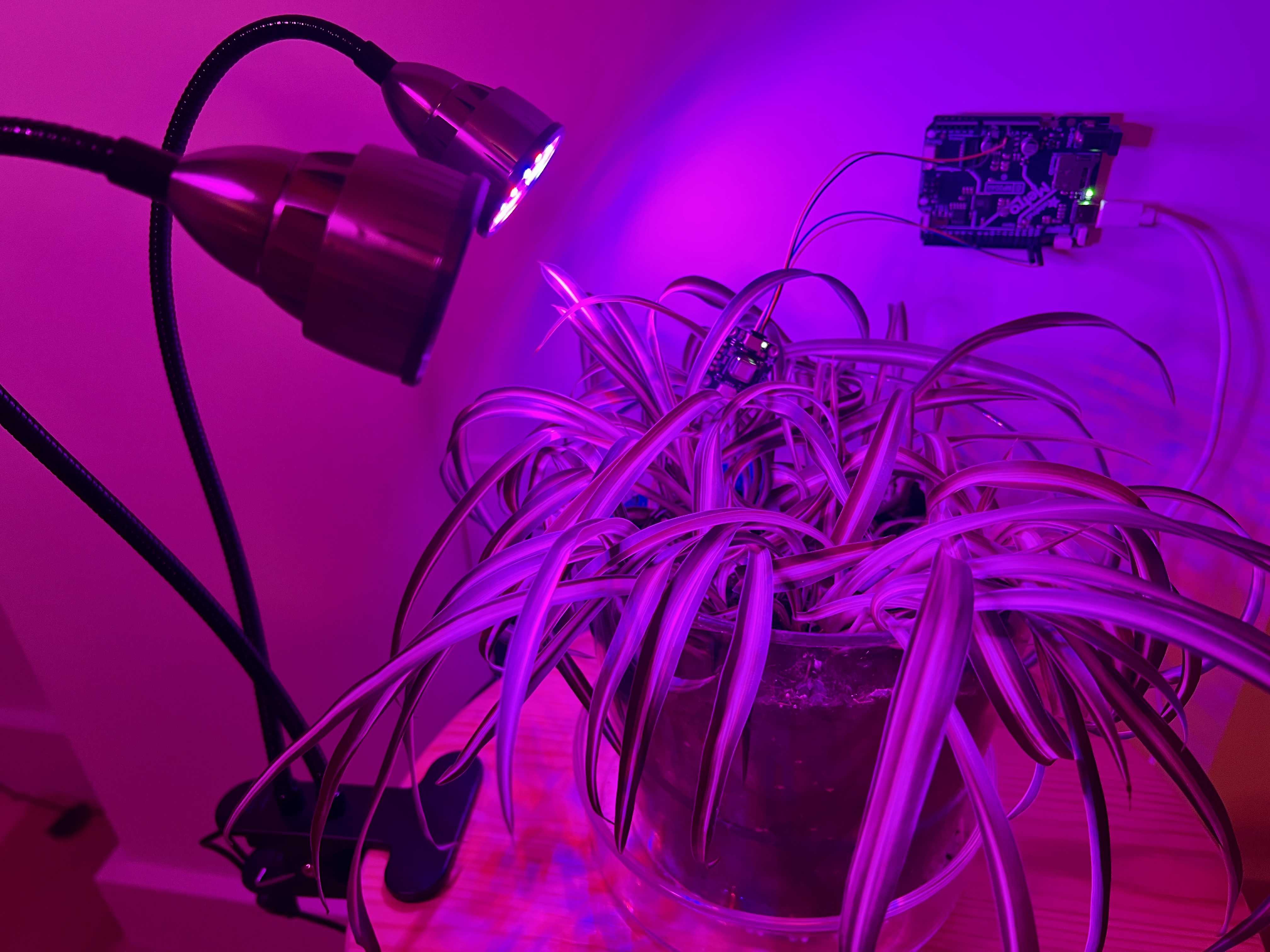
Data
Conditions
Each condition runs ~20 minutes, arranged sequentially on a shared time axis. The x-axis shows continuous elapsed time so you can read the CO₂ trajectory as one unbroken record — the light condition changes, but the clock keeps running.
Circadian
logging duration
tested
dark vs. purple
minimum (anomalous)
The CO₂ minimum at 01:48 is anomalous under a purely light-reactive model — if the plant were only responding to light, CO₂ should plateau or rise through the night as photosynthesis stops. The continued decline suggests ongoing carbon fixation, passive CO₂ dissolution, or the edge of an endogenous rhythm. What the data cannot yet say: whether the rhythm is endogenous or purely reactive. A constant-light or constant-dark run of 24+ hours is required to isolate the endogenous signal — the next experiment.
Thesis Context
This experiment begins with a simple act of witnessing — measuring how a spider plant breathes under different light conditions and across a full day. But the trajectory it points toward is a world where that breath becomes infrastructure. In a future of limited light and strained energy supply, bioluminescent plants engineered to intensify their own photosynthetic output line building facades and inhabit interior walls — not as decoration, but as a living electrical system. They absorb sunlight and return energy to the building in real time. The building becomes a living circuit.
The symbiosis is already written into the biology: we exhale CO₂ and water the plant, the plant flourishes and returns oxygen and energy. Engineered circadian rhythms extend that loop — drawing out the plant's natural patterns, amplifying them, without disrupting the biological cycle that makes them possible. The goal is not to override the plant's clock but to synchronize with it, and to build around it.
Monitoring how the plant breathes is the first step toward knowing how to breathe with it.